
Hydrocylinder
Through high-precision, non-contact displacement monitoring, the magnetostrictive displacement sensor significantly improves the control efficiency and reliability of the hydraulic system, especially suitable for industrial scenarios that require long life and maintenance-free, and is one of the key components of the intelligent upgrade of hydraulic cylinders.
Application examples to meet your personalized application fields.
-
Installation Example 1
The integrated embedded sensor is designed for integration and is widely used in various types of construction machinery and equipment. It replaces potentiometers and other contact-type linear sensors, providing non-contact measurement. It also features excellent shock resistance, vibration resistance, and interference resistance, with a maximum protection level of IP69K.
By achieving safe control of high dynamic systems, the production efficiency of equipment operation processes can be enhanced.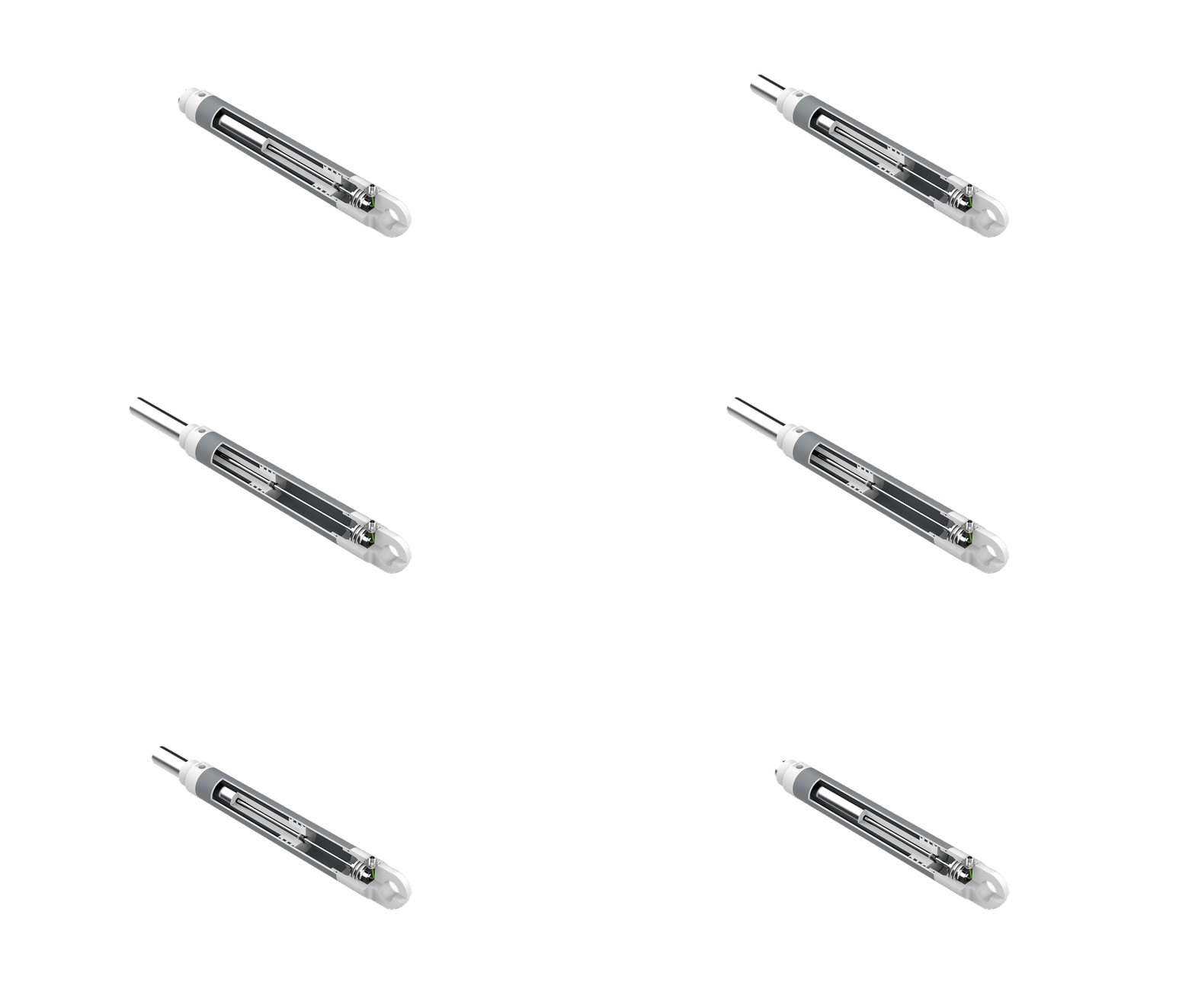
-
Installation Example 2
The pressure-resistant outer tube type sensor is designed for high-pressure environment applications, and can work at an ambient pressure of 35MPa for a long time, and can withstand an ambient pressure of up to 70MPa.
The sensor electronics housing can be withdrawn from the pressure-resistant outer tube, while the outer tube remains in the hydraulic cylinder, allowing for quick replacement of the chamber without the need for pressure relief.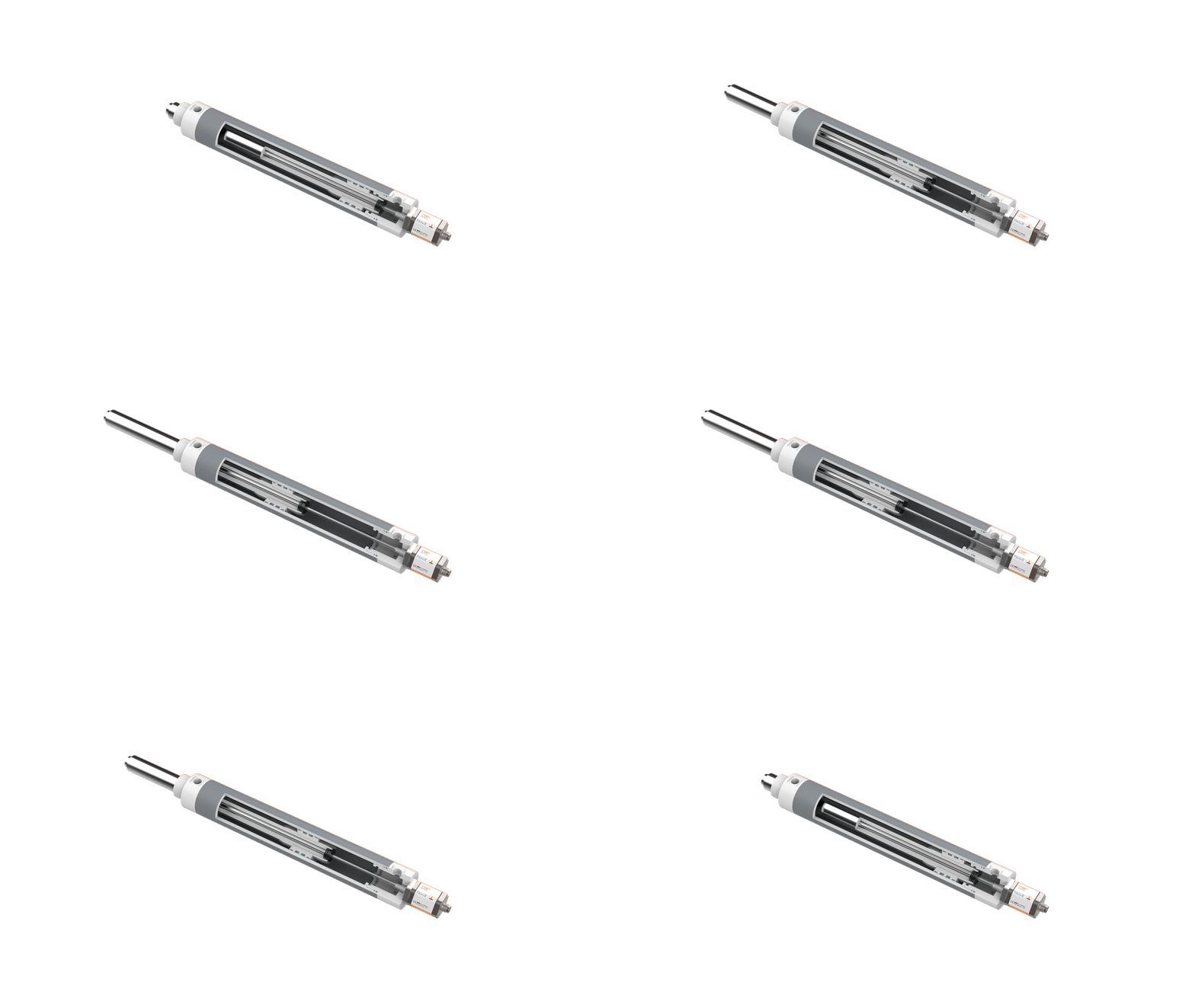
-
Installation Example 3
Flexible Sensor Installation
Flexible design facilitates transportation and installation.Long measuring range, up to 20 meters maximum.Adaptable to various working conditions and compatible with multiple communication protocols.The sensor electronic housing can be pulled out from the pressure-resistant outer tube while the outer tube remains inside the hydraulic cylinder. This enables quick replacement of the electronic housing without pressure relief.
-
Installation Example 4
Split Type Installation
It adopts a design where the electronic housing and the measuring rod body of the sensor are completely separated. Signals are transmitted between the two via special high-shielding cables, which physically isolate the core circuit from the measured environment.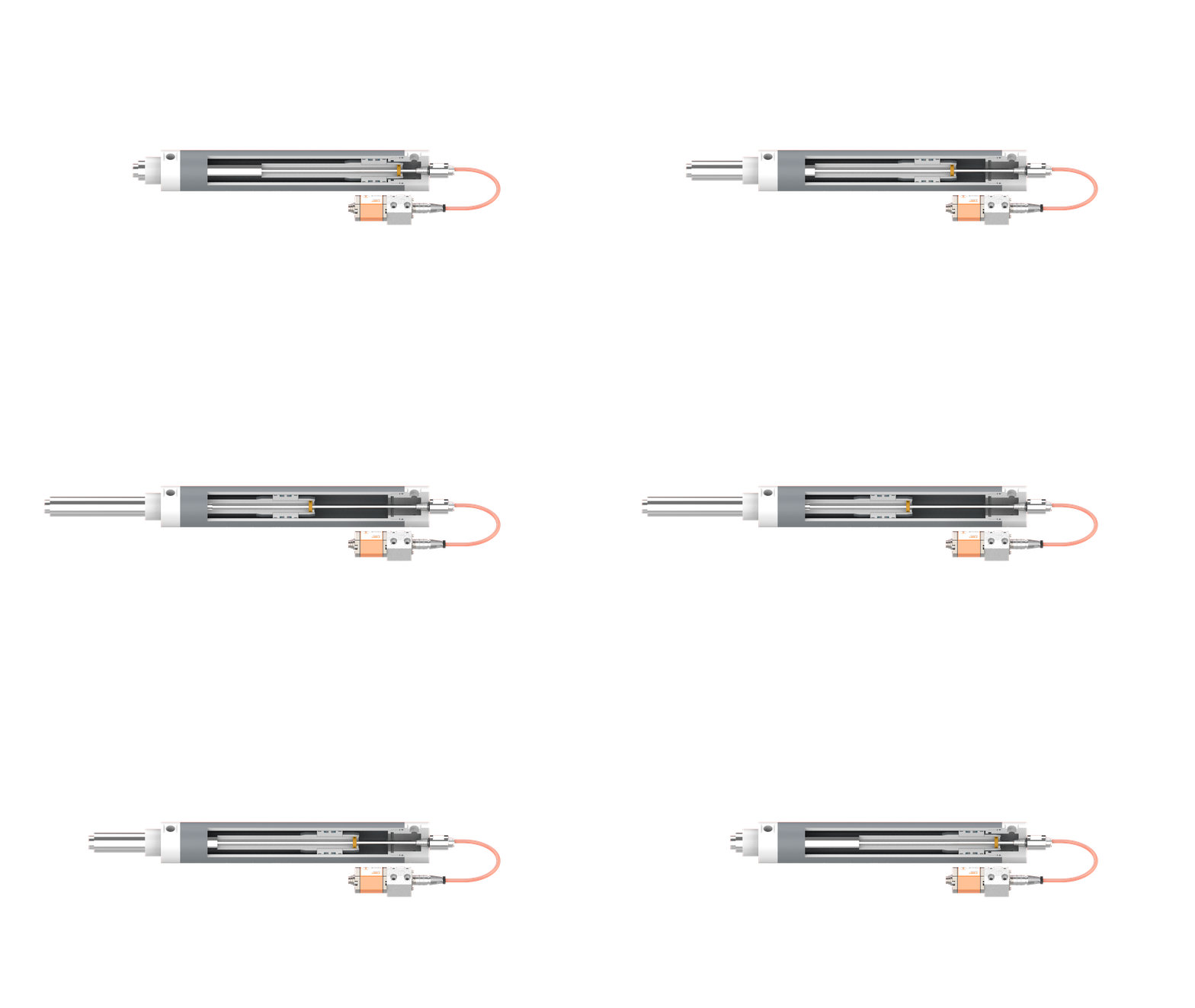


 京公网安备11011502038798号